
Alicante · 7 min read
Costa Blanca Road Trip: Alicante to Valencia Scenic Drive & Stops
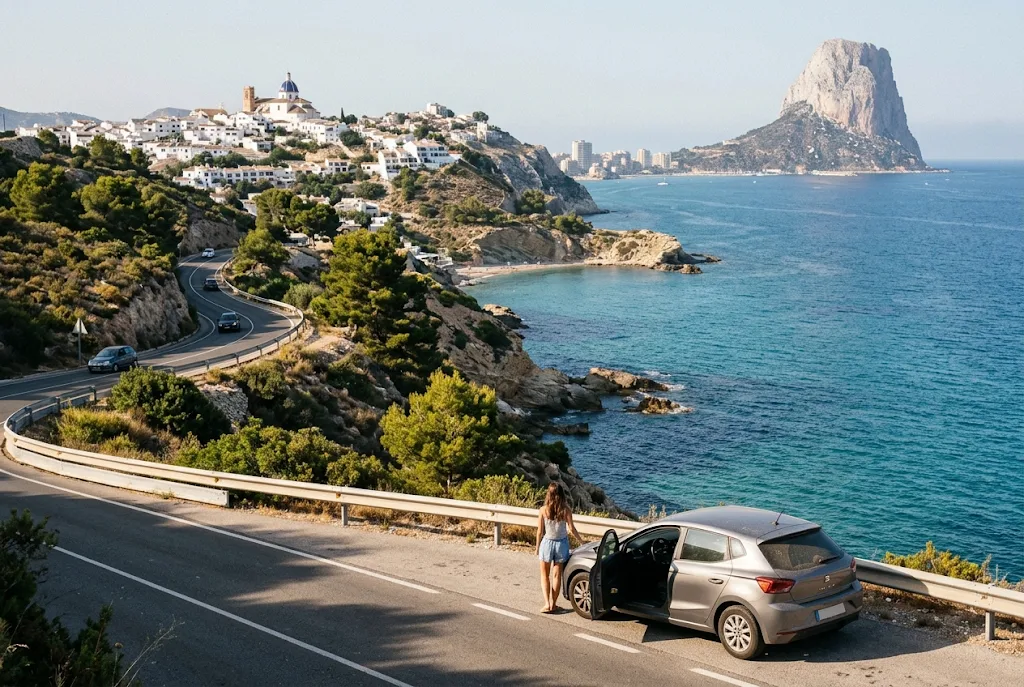
The Costa Blanca coastline in eastern Spain—stretching from Alicante to Valencia—ranks among the sunniest, most diverse, and most scenic road trips in the entire Mediterranean. Boasting over 300 days of sunshine a year, golden sand beaches, hidden rocky coves (calas), whitewashed villages, sheer coastal cliffs, and a rich culinary tradition rooted in authentic Valencian paella, this route delivers a fresh backdrop every twenty kilometres.
While trains and intercity coaches link the major cities, hiring a car in Alicante gives you complete freedom to trace the coast at your own pace, detour into the picturesque fishing ports of Marina Alta, and discover the Albufera freshwater lagoon before reaching Valencia. In this complete travel guide, we break down the two main routes (the fast AP-7 motorway vs the scenic N-332 coastal road), driving distances, toll updates, and the 7 best stops between Alicante and Valencia.
AP-7 or N-332: Which Route Should You Choose from Alicante to Valencia?
The total driving distance between Alicante and Valencia is roughly 165 to 195 kilometres, depending on which road you follow. In practice, you have two main options running virtually parallel along the coast:
| Feature | AP-7 Motorway (Autopista del Mediterráneo) | N-332 Coastal Main Road (Carretera Nacional) |
|---|---|---|
| Distance & Driving Time | ~166 km (1 hr 45 min non-stop) | ~192 km (2 hr 45 min – 3 hrs non-stop) |
| Tolls | €0 (Free!) — Tolls on the Alicante–Valencia stretch have been abolished | €0 (Free) |
| Speed Limit | 120 km/h | 50 – 90 km/h (frequent roundabouts & town crossings) |
| Scenery & Experience | Fast, modern inland motorway | Scenic coastal drive close to the sea, cliffs, and towns |
| When to Choose It | When you need to get to Valencia or the airport quickly | When you want a leisurely road trip with beach and food stops |
The smart road trip strategy: Combine both roads! Take the toll-free AP-7 to cover ground quickly between regions, and take exits onto the N-332 whenever you want to visit a coastal village, viewpoint, or secluded cove. This saves time without sacrificing any of the coastal highlights.
The 7 Best Stops from Alicante to Valencia
Whether you tackle the drive in one full day or spread it over 2–3 days with an overnight stay, these seven stops showcase the very best of the Costa Blanca:
1. Villajoyosa (La Vila Joiosa) — 32 km from Alicante
Your first stop heading north from Alicante is a burst of Mediterranean colour. Villajoyosa is famous for its brightly painted fishermen’s houses—historically coated in vibrant yellow, blue, terracotta, and green so returning sailors could spot home from out at sea—alongside a wide, palm-lined sandy beach. It is also Spain’s chocolate capital: drop by the historic Valor chocolate factory and museum to sample rich Spanish hot chocolate with fresh churros.
2. Altea — 55 km from Alicante
Bypassing the high-rises of Benidorm (or making a quick detour for panoramic skyline views), you arrive in Altea—easily the most artistic and picturesque village on the Costa Blanca. The Old Town (El Fornet) sits on a gentle hilltop packed with whitewashed cottages, flower-filled balconies, craft workshops, and cobblestone lanes. They all lead up to the church square of Nuestra Señora del Consuelo, crowned by its iconic blue-and-white tiled domes with sweeping views over the bay.
3. Calpe & The Peñón de Ifach — 65 km from Alicante
Ten kilometres further north stands the definitive geological icon of the Costa Blanca: the Peñón de Ifach, a colossal 332-metre limestone rock rising dramatically from the sea and linked to the mainland by a narrow isthmus (protected as a natural park). Right by the base of the rock lies Calpe’s fishing port, where you can enjoy fresh seafood alongside two broad sand beaches (Playa de la Fossa and Arenal-Bol) and the saltwater lagoon of Las Salinas, home to pink flamingos.
4. Moraira & Jávea (Xàbia) — 80 to 95 km from Alicante
Between Calpe and Dénia, the coastline turns rugged, pine-forested, and distinctly upmarket. Moraira is an elegant seaside resort free of high-rise developments, centred on a charming marina and the sheltered bay of El Portet. Just north, Jávea (Xàbia) boasts some of Spain’s most celebrated coastal coves, such as Cala Granadella and Cala Portitxol (Barraca), famous for its whitewashed fishermen’s huts with bright blue doorways and crystalline turquoise water. Tip: During July and August, aim to reach Cala Granadella before 09:30 AM, as car access is closed as soon as the small car park fills up.
5. Dénia — 105 km from Alicante
Dénia is a lively gastronomic hub—honoured as a UNESCO Creative City of Gastronomy—and the main ferry gateway to the Balearic Islands (Ibiza and Formentera). Park near the marina, walk up to the 11th-century Dénia Castle for 360-degree views, and wander the historic fishermen’s quarter of Baix la Mar. Be sure to try the prized local red prawns (gamba roja de Dénia) or a pan of traditional arròs a banda (rice simmered in rich seafood stock).
6. Gandía — 135 km from Alicante
Entering the province of Valencia, Gandía is celebrated for its sweeping beachfront (Playa de Gandía, stretching over 3 kilometres) and the impressive Ducal Palace of the Borgias (Palau Ducal dels Borja) in the historic centre. Gandía is also the birthplace of Fideuà—the iconic coastal cousin to paella prepared with short noodles and seafood instead of rice.
7. Albufera Natural Park & El Palmar — 175 km from Alicante (15 km before Valencia)
Just before entering Valencia, make an essential detour along the CV-500 coastal road through the narrow sand spit separating the Mediterranean from the Albufera lagoon—Spain’s largest freshwater lake and the birthplace of authentic Paella Valenciana. Stop in the canal-laced village of El Palmar for traditional paella (made with chicken, rabbit, garrofó beans, and saffron), then board a handcrafted wooden boat (albuferenc) for a peaceful sunset cruise on the lagoon.
Arriving in Valencia: Parking and Getting Around
When you reach Valencia—Spain’s third-largest city—be aware that the historic centre (Ciutat Vella) operates low-traffic zones (APR) with camera enforcement for non-residents. The easiest plan is to leave your rental car in one of the central multi-storey or underground car parks nearby (such as around Plaza de la Reina, Estación del Norte, or the City of Arts and Sciences / Ciudad de las Artes y las Ciencias) and explore the sights on foot or by hire bike along the lush Turia Gardens (Jardín del Turia).
Practical Tips for Planning Your Road Trip
- Pick-up at Alicante Airport (ALC) & Drop-off in Valencia (VLC): If you are flying into Alicante and out of Valencia (or vice versa), Carfast lets you book a seamless one-way car rental, collecting your vehicle at Alicante Airport and returning it in Valencia.
- Fuel & Service Stations: Both the AP-7 and N-332 feature modern service stations (Repsol, Cepsa, BP, Galp) every 10–15 kilometres. Fuel stations next to large hypermarkets (like Carrefour or Alcampo) generally offer the lowest price per litre.
- Driving rules in Spain: Before setting off, review local speed limits, roundabout priority rules, and low emission zones in our detailed guide to driving in Spain: speed limits, tolls, and required documents.
- Looking for local day trips? If you are basing yourself in Alicante and prefer day trips without switching hotels, check out our guide on Benidorm, Altea, Guadalest: 5 day trips from Alicante.
Alicante to Valencia Road Trip FAQ
Are there tolls on the AP-7 motorway between Alicante and Valencia?
No! Since January 2020, motorway tolls along the entire stretch of the AP-7 between Alicante and Valencia (and further north toward Tarragona) have been permanently removed. Driving on this motorway is completely free for all vehicles.
How many days do you need for the Alicante to Valencia drive?
Pure driving time is under 2 hours. However, to genuinely enjoy stops like Altea, Calpe, Jávea, Dénia, and Albufera, plan for 1 full day (08:30 to 20:30) or 2 days with 1 overnight stay (Altea or Dénia make fantastic bases).
What car rental category is best for the Costa Blanca?
A Compact Hatchback (such as a Seat Ibiza, VW Polo, Renault Clio, or Opel Corsa) or a compact SUV is ideal. These provide comfortable motorway cruising on the AP-7 while staying agile enough to easily navigate and park in tight coastal village streets.
Start planning your Costa Blanca adventure with complete peace of mind: Compare live rates, fleet options, and excess cover for car rental in Alicante through carfast.gr and discover every coastal gem on your way to Valencia.
NEXT STEP
Car rental prices in Alicante
More guides · Alicante